Why a Campus Routine Is More Than a Timetable
A campus routine at Thang Long University can make class changes less hurried, with simple handovers that keep notes, materials and the next task in order.
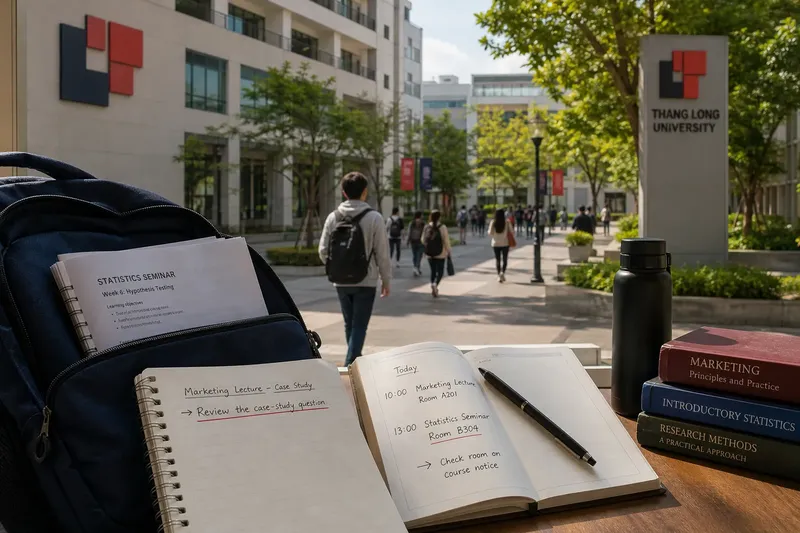
How do you move from one class to the next at Thang Long University without carrying every loose end with you? A campus routine gives each handover a few clear actions: close the previous task, check the next commitment and prepare what it needs.
A campus routine connects the fixed points in your timetable
A timetable lists commitments. A routine is the sequence that gets you from one to another: putting materials away, checking the next room and starting a different subject.
A class can end before your attention has caught up. You may need to record a question, find the right handout or confirm where the next session meets. A repeatable handover handles those small tasks without trying to control the whole day.
Keep it flexible. Delays, conversations and timetable changes happen; a useful routine leaves room for them rather than treating every interruption as a failed plan.
Use a closing cue before changing subjects
Before putting work away, write down the next action for anything unfinished. Close the relevant file or place the notes in their folder, then take out the materials for the next class. The aim is to leave a clear route back to the first task, not to keep thinking about it during the next lecture.
Say you have just finished a marketing lecture and are heading to a statistics seminar. Your starting point is a marketing notebook with one unanswered case-study question, a statistics handout in your bag and a timetable showing the seminar room. Write “review the case-study question” on the marketing page, put that notebook away, take out the statistics handout and check the room. The expected result is a visible next action for marketing and the right material ready for statistics; if the timetable shows a different room, confirm the current course notice before setting off.
Make the cue short. A ritual elaborate enough to need its own planner is unlikely to improve anyone’s afternoon.
Check the next commitment before leaving
A brief check can prevent avoidable confusion. For each item, make the decision that follows from what you see:
- Room: If the timetable gives a clear location, head there; if it is blank or conflicts with a course notice, confirm the current location before leaving.
- Materials: If the next class calls for a book, handout or device, gather it; if it calls for nothing you do not already have, leave extra items behind.
- Previous task: If it is finished, file its materials; if it is unfinished, write the next action in the relevant notebook before putting it away.
- Time available: If the gap is clear and there is one small task with a definite stopping point, do that task; if the gap is uncertain or short, prepare for the next class instead.
- Course update: If a current notice changes the plan, follow that information; if there is no update, use the timetable rather than checking repeatedly.
- Items in hand: If an item is needed in the next session, keep it accessible; if it is not, put it away so it is less likely to be misplaced.
These checks are about arriving ready to begin, not turning every corridor into a mobile office.
Attach recurring handovers to familiar moments
Some transitions repeat often enough to deserve a familiar sequence. You might check the timetable before the first class, record unfinished work as each session ends and gather tomorrow’s first materials before leaving campus.
Attach each action to an event rather than a precise time. “After the lecture, check the seminar room” still makes sense if the lecture starts late. If a step keeps getting skipped, make it smaller or link it to something you already do, such as putting your notebook away.
There is little value in colour-coding every handover, building an elaborate planner system or assigning work to each spare moment. A plain notebook, the university timetable and a short phone reminder may be enough. Use the simplest arrangement that helps you find the next task without confusion.
What do students ask about campus routines?
How is a campus routine different from a timetable?
A timetable records fixed commitments, such as classes and room locations. A routine covers the repeated actions that help you prepare, switch subjects and resume unfinished work.
What should I do when a class ends early?
Check whether the next room or course information has changed. If the plan is settled, use the remaining time for one small task with a clear stopping point or prepare your materials.
How can I remember unfinished work without carrying it into class?
Write the next action in the relevant notebook or task list, then put the work away. “Outline the second argument” gives you a clearer place to resume than “work on essay”.
What should I change if my routine keeps breaking down?
Identify the troublesome handover: perhaps materials are missing, room information is unclear or an unfinished task is hard to set aside. Change that part alone and keep the habits that still help.
Return to the next useful cue when plans change
A room change or a conversation that runs long need not undo the rest of the day. Check the current information, gather what the next class needs and begin from there.
For anyone searching for a campus routine at Thang Long University, the practical value is straightforward: a short closing note, a check of the next commitment and a little flexibility can make class transitions easier to manage. The useful routine is the one that helps you resume your work without requiring you to manage every minute.